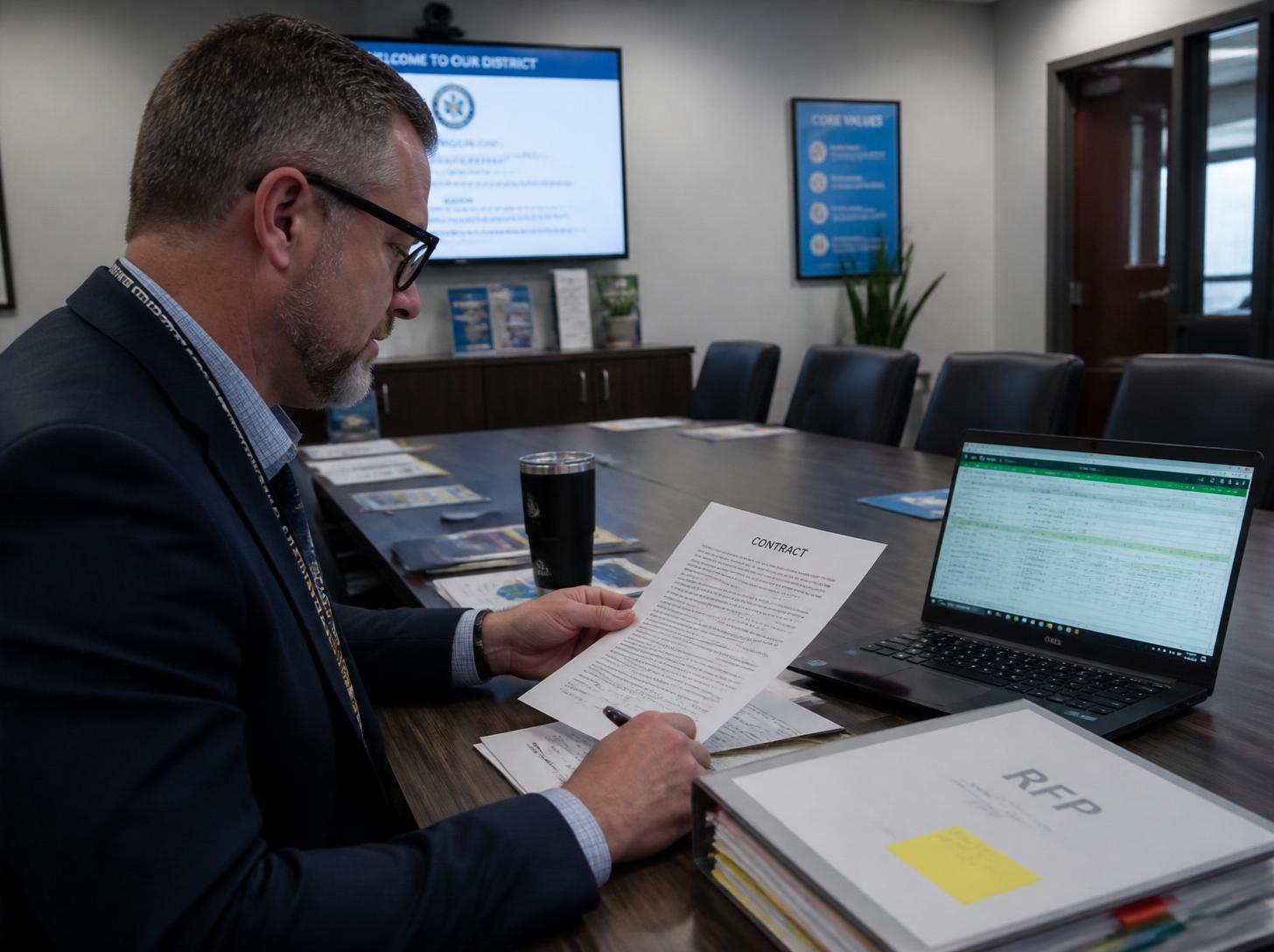
Cooperative contracts, board approvals, and compliance requirements—we understand every aspect of public school purchasing and will collaborate with your system to discover the quickest, clearest path ahead.
K-12 purchasing does not follow a single path. Whether your district need a formal RFP or can move more quickly through a cooperative contract vehicle, we understand the terrain and will assist you in finding the most efficient and compliance way.
We understand what procurement looks like in a public school system. A whole RFP takes 60 to 120 days, involves numerous departments, and frequently stops when IT priorities change mid-cycle. Cooperative contract vehicles can drastically shorten that schedule – and we know how to assist your district find and qualify for the proper one.
The cooperative purchasing frameworks listed below are the most commonly used by K-12 districts to procure technology services. Each was granted through a competitive bidding process that followed public procurement laws. Tell us where your district stands, and we'll let you know which option is the fastest for you.
Don't see your state contract? Contact us — we'll confirm your purchasing path within one business day.
We understand what your legal team, corporate office, and school board will ask. We built every aspect of our service on those replies.
We never sell or distribute student information. For students under 13, we comply with COPPA regulations through your district's existing consent process. We sign a Data Privacy Agreement (DPA) before we start. It is FERPA compliant. It also addresses state privacy legislation, including Illinois SOPPA and California AB 1584.
We set each device to function with your existing content filter, not to replace it. Your CIPA policy is enforced at the device level. Students can't get around it with a VPN or proxy, even off campus.
All retired equipment is cleansed and data is erased per the federal NIST 800-88 requirements. You get a Certificate of Destruction to retain with your FERPA records—exactly what your district's legal staff will ask for. R2/RIOS is the electronics recycling standard for ethical disposal when physical devices are recycled.
Three data points that appear in every district's budget review — and how a controlled program transforms the calculation.
60% of districts deal with up to ten broken devices per week. A managed loaner program ensures that every student is online the same day, without requiring your IT crew to drop everything to handle it manually.
Source: LocknCharge K–12 Device Research, 2024
More than half of districts lose 6% or more of their fleet each year. Track repair costs per student and a managed ITAD program (device recycling and certified buyback) – to turn that unanticipated budget hit into a fixed, recoverable cost.
Source: Frontline Education District Survey
In 2026, nearly all U.S. school districts (93%) intend to buy Chromebooks. Before you commit to a budget, conduct a fleet audit to map out your AUE dates and repair costs. This will ensure that your board presentation is backed by real figures.
Source: Mordor Intelligence 2025
We eliminate the patchwork of providers, spreadsheets and workarounds your team is juggling now. We work with your admin console, not above it.
Buy Chromebooks and accessories in bulk and save money. Each one is set up and given a tag before it leaves the warehouse.
Devices arrive at schools ready to go – enrolled, assigned and inventoried.
Break-fix handled with a same day supplied loaner. A broken screen shouldn't mean a week of class for a regular student.
Certified data wipe, appropriate recycling, and any remaining device value credited to your district.
Adjust the slider to your fleet size. Numbers are updated in real time based on available K-12 district data.
How many devices do you handle for students in your district?
Estimates are based on published K–12 data: 8% annual damage rate (LocknCharge, 2024); $115 average repair cost, the midpoint of the $60–$170 range of common Chromebook repairs from district fee schedules (LocknCharge, Feb. 2026); 6% annual device loss (Frontline Education District Survey); $300 average device replacement, the midpoint of the $200–$500.74 district schedule range (LocknCharge, 2026) and $200–$400 standard education Chromebook pricing (Mordor Intelligence, 2025). Your actual charges will be different.
Get your exact numbers — free auditWe will check your Chromebook models against Google's Auto Update Expiration (AUE) dates. Then we'll estimate your repair costs for the next three years. You'll find out the value of recycling your old devices and the cost of managed service, per device, each year.
Only for K-12 education IT teams.
No commitment. There is no sales pitch on the first contact.